This is the single most common way a first visit to Hachinohe goes wrong. There are two stations with almost the same name — Hachinohe Station and Hon-Hachinohe Station — and they are not in the same place. They are about 6km apart, in effectively different parts of town.
"I got off at Hachinohe Station and there was nothing there." "I took a taxi from the wrong station because I didn't know my hotel was by the other one." We hear this from guests arriving at Nvillage, and in messages from guests who have not arrived yet. So here is the explanation we give in person, in the order we give it — worth reading before you book a room or buy a ticket.
The short answer: your bed decides it
For almost everyone coming from far away, one question settles it.
- Arriving by Shinkansen, staying near the station, leaving by Shinkansen → Hachinohe Station
- You want to drink downtown in the evening → Hon-Hachinohe Station
- You are here for the coast or the morning markets → either, because you will ride the same JR Hachinohe Line
- You are flying into Misawa Airport → Hon-Hachinohe, because the airport bus does not enter Hachinohe Station
Nvillage is on the west side of Hachinohe Station, so our answer to guests is always "get off at Hachinohe Station." The door-to-door directions are on the access page.
Hachinohe Station: the Shinkansen gateway
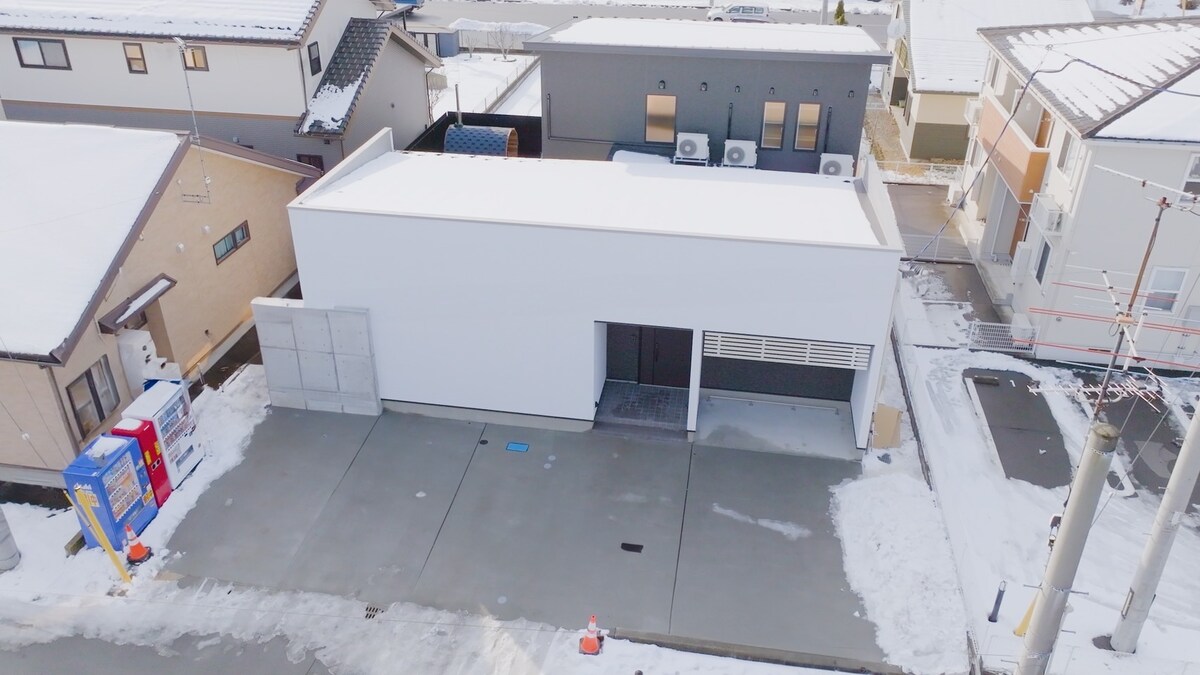
Hachinohe Station is the interchange: the Tohoku Shinkansen, the JR Hachinohe Line and the Aoimori Railway all meet here. If you are coming from Tokyo, from Aomori or Morioka, or picking up a rental car, this is where you land. Buses to Hasshoku Center and towards the Oirase Gorge also start here.
What it is not is a nightlife district. Around the station you get the station building, a handful of places to eat, and then houses. Arrive at 10pm hungry and your options are thin. That is a difference in character rather than a flaw — it is a quiet place to sleep, and our guests generally walk over from the station and have a quiet evening.
One practical detail: the station has an east exit and a west exit, and they feel like different towns. Buses and taxis gather on the east side; the west side is residential. Crossing from one to the other after you leave the gates means walking the concourse with your luggage, so decide which exit you want before you step off the train.
Hon-Hachinohe Station: the downtown station
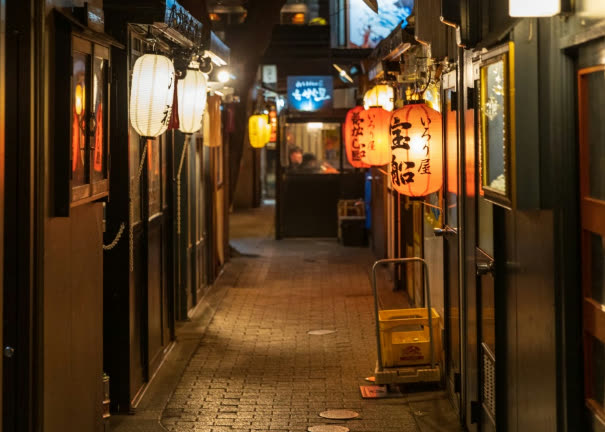
Hon-Hachinohe is served only by the JR Hachinohe Line — no Shinkansen. In exchange, downtown Hachinohe is right there. The city's own walking guidance puts Hachinohe Portal Museum Hacchi, in Mikkamachi, about 10 minutes on foot from the station, and Miroku Yokocho — the alley of tiny food stalls — roughly 80m further, another two minutes.
So if your evening plan is bar-hopping in the yokocho, sleeping on the Hon-Hachinohe side is far easier. City hall, the department store and the Mikkamachi–Yokamachi shopping streets are all in the same walkable pocket. What to eat while you are there is covered in our senbei-jiru article.
The catch runs the other way: you cannot board a Shinkansen at Hon-Hachinohe. If you sleep downtown and have an early bullet train, your morning starts with a transfer to Hachinohe Station. People forget to budget for that leg every year.
Getting between the two: 8 minutes by train, 25 by bus
The JR Hachinohe Line links them: two stops, 5.5km, about 8 minutes, 200 yen. No transfer, and it is both the fastest and the cheapest option.
Frequency is the catch. This is not a metro. At some times of day the gap to the next train approaches an hour, so pick your train first and then go to the station, rather than turning up and hoping. Times are on JR East's Hon-Hachinohe timetable.
When the train times don't work, take the bus. Hachinohe City states that the city bus and Nanbu Bus jointly run the Hachinohe Station–downtown route, via Tamonoki/Shiho Center-mae and via Nejo Ohashi, at roughly 15-minute intervals, at 370 yen from Hachinohe Station to the Chushingai terminal (Mikkamachi, Yokamachi). Early morning, evening and night departures are timed to the trains at Hachinohe Station. Allow around 25 minutes depending on traffic. Details are on the city's downtown access page and its joint-operation page.
In short: the train is faster and cheaper, the bus runs more often. Choose by what is actually departing at the hour you need.
The Hachinohe Line is not just a shuttle between the two
This is the part visitors gain most from. The same line that connects the two stations carries on along the coast for 64.9km to Kuji in Iwate. The stretch from Hachinohe to Same carries the nickname "Umineko Rail Hachinohe City Line", after the black-tailed gulls.
Which means: stay on the train you took to Hon-Hachinohe and it keeps delivering you places.
- Mutsu-Minato — the morning fish market district, and the station for the Tatehana Wharf market
- Same — Kabushima and its gulls, about 15 minutes on foot from the station
- Tanesashi-Kaigan — the coast where natural lawn runs down to the waterline, roughly 35 minutes from Hachinohe Station
The coast itself is covered in our Tanesashi and Kabushima guide, and the Mutsu-Minato and Tatehana morning markets in our mackerel and squid guide — Hasshoku Center, which you reach by bus from Hachinohe Station, is a different market again. The Tatehana Wharf morning market runs on Sunday mornings only, with a special train and a shuttle bus laid on for it. It is walkable from Mutsu-Minato station, though published estimates range from 10 to 20 minutes, so check the market's own page for the current dates and directions before you set out.
The trap: the Misawa Airport bus does not stop at Hachinohe Station
This is the mistake with real consequences. The connecting bus between Misawa Airport and Hachinohe serves Hon-Hachinohe Station and the downtown stop at Yokamachi. It does not enter Hachinohe Station. Hachinohe City and the airport put the ride at about 55 minutes and 1,500 yen.
So if you fly in and sleep near Hachinohe Station, your arrival is two legs: bus to Hon-Hachinohe, then train or bus onward. Going home, you cannot catch the airport bus at Hachinohe Station at all. Times and stops are on the city's Misawa Airport bus page.
One more, for booking: a listing that says "X minutes from Hachinohe Station" sometimes means Hon-Hachinohe. If Japanese station names all look alike to you, the reliable move is to check where the pin actually sits on a map.
Cheat sheet: where to get off, by destination
- Shinkansen connections, rental cars, the bus to Hasshoku Center → Hachinohe Station
- Miroku Yokocho, the Mikkamachi and Yokamachi shopping streets, Hacchi, city hall → Hon-Hachinohe
- Tatehana Wharf morning market, Mutsu-Minato market → Mutsu-Minato (Hachinohe Line)
- Kabushima and the gulls → Same (Hachinohe Line)
- Tanesashi natural lawn, the Michinoku Coastal Trail → Tanesashi-Kaigan (Hachinohe Line)
- Bus to or from Misawa Airport → Hon-Hachinohe Station or Yokamachi downtown
- Nvillage → Hachinohe Station, west exit
You can see how these sit relative to each other on the map in our area guide. If you have not settled on destinations yet, browsing the experiences page first and choosing a station after is a perfectly good order to do this in.
Why the names are like this
The history makes it stick. The station in the town itself was originally the one now called Hon-Hachinohe — that one was "Hachinohe Station". Today's Hachinohe Station opened in 1891 out beyond the edge of town under a different name entirely: Shiriuchi.
They swapped in 1971. Shiriuchi was renamed Hachinohe Station, and the old Hachinohe Station became Hon-Hachinohe. The renamed station was the one the Tohoku Shinkansen would eventually reach, so the city's name went to the trunk-line stop. Remember that "Hon" marks the original town station and you will not mix them up on the ground.
What staying on the west side actually means
To be straight about our own side of it: the west exit is not a nightlife area. Evenings are quiet and the convenience store is a walk away. Guests who plan to drink downtown work out their ride home before they go.
What you get instead is a short distance from stepping off the Shinkansen to dropping your bags, and no panic when the next morning starts early. The Hachinohe Line to the coast and the markets also starts from this station. On longer stays, the things that matter later are the washer and dryer and the barrel sauna (paid, by reservation) for legs that have walked all day.
If you are unsure which station suits your itinerary, send us the places you want to reach through the contact page — dates need not be fixed. We will answer along with what is free in the rooms.